Traditional stream structure vs. Multi-stream structure

Science, Commerce or Humanities? Upon completing high school, any teenager is asked this question by a nosy, judgmental relative. Not for long, though. The next generation of school students will finally avoid this painful rite of passage of selecting their subject stream in Class 11.

The ambitious National Education Policy (NEP 2020) of the Narendra Modi-led government, which fully overhauls India’s existing education system, was approved recently. Eliminating the ‘rigid’ division of streams is one of the key decisions it takes. At the same time, you can select and choose the things you want.

In Class 11, the holy trinity of subject streams, with one stream still considered more sacred than the others, was considered a significant phase in the life of any Indian student. So much so because everybody would be involved in the ‘life direction’ you chose, from your great-aunt to your neighbor’s husband, and the subjects you want to learn as a 16-year-old clearly eventually determine the course of your life. But what they really want to know is if you were bright enough to be admitted into science, and if you did, how much tuition or coaching courses you wanted.

At the root of it, NEP can be seen as a radical attempt to overhaul a beleaguered education system, but a very critical detail was overlooked by the Ministry of Human Resources Development, or rather the Ministry of Education: Indian parents and their love affair with the science stream.

There is a radically different approach to higher education in India relative to education abroad. The defining characteristics include the method of education, methodology, education study, curriculum, etc. 

Education is organic; it begins to expand and change with time and with the human mind. This is the primary reason why education in various nations of the world is distinct. For any country, the values on which education systems are formed are distinct. Nevertheless, the objective is identical, i.e., to instill curiosity within the human mind.

In plain terms, every education scheme has its pros and cons-benefits and drawbacks. The Indian education system, as a developing country, has been built on foundations that foster comprehensive theoretical understanding and train students for some of the world’s toughest competitive exams. While other developing countries’ education programs are more versatile, they allow students to seek alternative job prospects other than the conventional alternatives.

Indian Stream Culture vs. Foreign Education System

In India, students can not switch their major subjects in the middle of courses. For e.g., If you are a physics major student in the middle of your course, you can not opt for other subjects such as languages or economics. In India’s educational institutions, the curriculum focuses more on quantitative education and depends on studies done in the past.

Despite the continuous assistance provided by the government, there are few funding funds, so there are also fewer research projects. In the curriculum of Indian universities, modifications based on the current and accepted scientific studies are introduced very late.

To draw students from different countries to choose courses offered by Indian Universities, India has not yet been able to internationalize education.

Indian universities and colleges provide students with restricted courses to select from.

The work opportunities offered by Indian universities are restricted to leading educational institutions. India’s pursuit of education is accessible. Indian Universities’ ROI is conditional and depends on the college that you will join. And there are only a few scholarships at Indian universities.

Whereas, Many European colleges and US-based universities give students the freedom to switch subjects and do not restrict them to only one subject. Foreign universities’ curriculum follows a more realistic approach to education, which promotes a new study about what has already been found. Research at international institutions is funded by some of the world’s leading organizations, such as Microsoft and Google. Therefore, the research projects offered there are stronger. Every few years, universities in the US and some other developing countries change their curriculum and thereby deliver more advanced education. A diverse community of students coming from different countries comes from international universities. A student, therefore, gets greater visibility. Students are equipped for numerous courses and specializations from foreign universities. International Universities provide students with outstanding career opportunities. It is often costly for developing countries to seek schooling since the cost of housing, food, transport, etc. is added to the total spending. The ROI of universities abroad is nice. The cost of learning could be costly, but learning abroad gives one’s career a kick start. Foreign colleges provide foreign students with various scholarships. Students may also take part in work-study programs in addition to that.

Compared to the Indian education system, there are several significant factors that make the international education system more accessible.

The theoretical and practical approach

Both of these techniques are important. While we have a practical-oriented research plan, relative to the theoretical approach, we are more market-ready. The Indian method of education is solely metaphysical, whereas the international system is completely realistic. Not just that, the method of realistic research makes the process simple, engaging, and exciting, while the analytical approach makes the learning process less engaging and often monotonous.

Creativity or marks

Each of us is quite well aware of the fact that scoring good marks is extremely vital to get into a good school/college. Not only does this limit a learner from exploring his / her horizons, but it also blocks their imaginative hand. 

Foreign education, on the other hand, helps and inspires a pupil to think out of the box and to show their innovative side.

Degree or knowledge

One has to get a degree, regardless of the amount of expertise you get, to become eligible for any of the work openings in India. Unlike India, education in foreign countries is taken as a learning process, and students master the principles by researching and adapting them to their working community.

A tested route or a field of your liking

It is as if the set rule is that if a student has a good score, he/she has to opt for subjects related to science, and if a student fails to score well, he/she must opt for trade or subjects related to the arts. However, a student is encouraged by the international education system to go for a subject depending on his / her liking.

These were some of the over-rated distinctions between studying in India and studying abroad. Though India is heading towards digitization, numerous new courses are also coming up.


Gender Biases in Education and How Gender Fund Can Help

Children seem highly influenced during adolescence by the conventional gender roles amplified in pop culture. Academic study has shown that the assertive male and timid gender roles are frequently strengthened in our schools and classrooms.

DISPARITY OF GENDER: PARTICIPATION

So what about our classrooms? Male students frequently lead and control classroom conversations in my various impressions of middle and high school classrooms. They raise their hands more often than female students to answer questions, and they volunteer more often to read their writing or the class texts aloud. Because of this, teachers frequently implicitly focus on male learners as their target or go-to respondents and volunteers, according to a survey. The consequence is that girls are then called on less often, compounding their silence in teaching activities and unintended gender inequality.

Starting in grade school, educators interact with female students less often, asking them fewer questions and giving more guidance to males.

There is an unequal allocation, all in favor of male students, teacher time, energy, and interest. The number of gender roles is surprising in lessons and teaching methods.

DISPARITY OF GENDERS: CURRICULAR MATERIALS

Male-dominant curricular resources are popular in classrooms, in addition to the gender imbalance in-class participation and teacher interest.

Less than 30 percent of the authors were female, according to studies in three language arts textbooks currently in use in the second-largest school district in the United States, Los Angeles Unified (LAUSD), in the eighth-grade language arts textbook. (Girls represent 52% of LAUSD students.) The findings were identified in the other two textbooks (for ninth grade and 10th grade).

EXAMINING OUR PRACTICES AND CURRICULUM

For girls and boys, hidden gender biases in curricula and gender roles’ socialization contribute to inequitable schooling. What improvements should be made to build for all students an equal learning environment?

Take a moment to consider the subsequent statements as you reflect on your classroom and gender equity:

1. Do any texts that I use, or tokenize their experiences, omit girls and/or women? How are they stereotyped by boys and/or men?

2. In any texts I have picked, are females or males portrayed in stereotypically gendered roles? How can I teach students to be critical of the shortcomings of these texts’ gender roles if these are historical texts?

3. Do I promote my students’ empowering and nonsexist behaviors? Should I discourage gender roles of both females and males?

4. When I have a library in the classroom, is there a balance between male and female authors? Are there a lot of books with good characters for females? Do the nonfiction books feature women and girls of note?

5. In what ways do I foster speech and participation equality between women and men?

6. Should I ask difficult questions for girls as well as boys? Should I interrogate female students as diligently and intensely as I do male students through discussions?

STRATEGIES TO IMPROVE PRACTICES AND CURRICULUM

In your classroom, here are a few strategies for strengthening gender equality. 

1. Do your analysis and bring more prominent women to the mix if you see more male authors, physicists, and mathematicians featured in the textbook you use.

2. Intentionally, use wait / think time. Choose the fourth, fifth, or sixth instead of calling on the first or the second hand.

3. Be mindful of the number of female students you are calling. Be highly vigilant in ensuring that all students are equitably involved in debates and engagement (regardless of gender, race, language, or learning ability).

4. In the text used in the classroom, point out sexist notions or language, such as a textbook, journal essay, poem, academic paper, or blog post. You can also highlight any gender-stereotypical language used by students in the classroom and use it to invite broader discussion. 

5. Videotape your lessons and review your student experiences. You may also invite a peer to watch you teach and mention which questions are being asked to pupils and what sort of questions are being asked. 

6. Plan a study lesson or unit focused on discussing identity, self-image, and inclusion concerns with your students.

How Gender Funds Can Curb Gender Biases

Gender equity investments remain vastly lacking, and only a limited percentage of assistance meets women’s unique needs. Prioritized, committed, and continuous investment and support are needed for women everywhere.

On average, women are paid 24 percent less than men globally.

Concerted efforts by all stakeholders may change the global economic and financial system. With concrete strategies, we need to discuss the systemic roots of inequality. Governments, employers, and labor unions should work on several strategies to counter gender disparity in wages, from national minimum wage legislation to the provision of well-paid, safe public sector care workers to ensuring that fair pay regulations are enforced.

Gender equality in school enrolment is close to being accomplished globally, particularly at the primary level; however, very few countries have met that goal at all levels of education. Adult women have 7.3 average years of schooling, on average, around the world, while males have 8.2.

Girls who enroll can be assisted in finishing their schooling, not drop off along the way, at all stages. Investments in designated toilets for children, adequate housing, literacy, and technology services, as well as pre-primary care, need to be prioritized by states.

Providing paid leave and child-care services makes it much easier for women and men to mix paid and unpaid work, expand women’s employment options, and access education and training.

Ed Tech Companies In India

For a better and more inclusive world, the convergence between technology and education is making headway.

Technology in education makes learning faster, more streamlined, and enjoyable. 

Adding to this, the demand for edtech is busy with imaginative goods. New startups in education are personalizing their products to resonate on a personal basis with the end-user.

In many ways, these education companies affect the life of a student. Students are granted access to cutting edge technology and methods of learning. Such startups encourage learners to have fun while studying. 

Here is a list of the top edtech companies in India.

Code Global

Code Global is committed to supporting artificial intelligence, the Internet of Things, and robotics. It is on a mission to make India, through full automation, a smart world. From retail to H.R., Code Global provides its clients with innovative technical services and products. It is an educational technology organization that is committed to improving the way K12 education is carried out. As part of the Startup India program, a Government of India program, Code Global is the first Indian entity to register as an IoRT (Internet of Robotic Things) corporation. Its partnership includes I.I.T. Kanpur, I.I.M. Lucknow, Delhi Management Association, Nasscom, and many more.

Test prep and K-12 edtech startups combined are expected to be worth $1.3 Bn by 2021, according to research. Code Global is only one of the many startups in the Indian market looking to tap into this emerging demand.

BYJU’S

BYJU’S, India’s first edtech unicorn, has a learning app that was introduced in 2015 and has IV-XII student learning programs along with courses to help students study for competitive exams such as JEE, NEET, C.A.T., I.A.S., GRE, and GMAT. It has also recently partnered with Disney to introduce a Classes I to III learning application. The company announced its sales at $69.4 Mn (INR 490 Cr) for the financial year 2017-18, a 97 percent rise since the last financial year. This financial year, it is aiming to reach a sales goal of (INR 1400 Cr).

Doubtnut

Doubtnut is a multilingual online learning platform that currently serves K12, IIT JEE, NEET students and uses A.I. and ML technology for image recognition, natural language processing, and proprietary machine learning algorithms to offer video-based solutions in response to queries from students.

Students just take a picture of a problem, and within 10 seconds, the Doubtnut app serves up a video of the answer while occasionally recommending other idea videos to help students understand the subject further. In 11 Indian languages, as well as English, the app will read questions. The business has more than 13 million monthly active users (web, app, YouTube, and WhatsApp) across many channels.

In low-income groups, where the need for low-cost educational facilities is strong, it is highly common. Since March 2019, Doubtnut has seen a 30x rise in its regular active users, as reported by the company in an official media release.

Gradeup

By incorporating one year and two-year programs for Class XI and XII learners preparing for JEE and NEET, Gradeup aims to make a deeper presence in the K12 space. Data analytics and interaction analysis are crucial to Gradeup ‘s growth, and the organization plans to further develop its data science technology capability to better help students enhance their performance.

In order to build the platform and services that will help aspiring students achieve results for its customers, it is spending a lot on research and product growth. In addition, Gradeup will invest in creating a better product for its students with a greater degree of commitment and achievement, scaling up the working segments, and reaching out to a wider audience. Enrolments have doubled every quarter, as the founders believed, and income has increased by around 30 percent to 40 percent every month.

TestBook

Testbook is an online preparatory forum for competitive government assessments of all sorts. They have seen more than 35000 choices over the past five years, put in numerous government positions. Navi Mumbai, the 200 + strong Testbook.com team, based in Kharghar, has successfully raised four funding rounds. The company recently earned INR 60 Cr as part of its Iron Pillar-led Series B round of investment.

In April 2019, Testbook claimed to have been profitable and posted INR 31 Cr annual sales with INR 45 Lakh EBITDA (earnings before depreciation, debt, taxes, and amortization) in the last financial year.

Toppr

Toppr caters to the individual learning preferences of applicants and delivers 1.5 million course variations of the broadest K12 syllabus coverage. It now has more than 10 million students on its website and helps them train for diverse colleges, commissions, and competitive tests. To address student doubts immediately, it uses natural language processing. In order to research student behavior and construct adaptive learning pathways of unlimited variations, it also incorporates artificial intelligence, computer learning, and big data.

Unacademy

In 2010, Gaurav Munjal launched this Bengaluru-based startup as a YouTube channel. In 2015, when co-founders Roman Saini and Hemesh Singh came aboard, it was formally licensed as an educational technology site. It has raised $88.5 Mn to date. The group claims to have more than 10 thousand certified teachers and more than 13 million students. It also says that across its different channels, such as Unacademy, Unacademy Plus, Wifistudy, Chamomile Tea with Toppers, Unacademy Studios, and The Solutionists, it gets 100 Mn monthly views.

Vedantu

It is a live site for online tutoring that makes for personalized learning. In order to facilitate live learning between them, Vedantu uses technology to put teachers and students together on a single platform. While Vedantu’s Android app is less successful than its peers, the startup is an eye-catcher for investors. After its founding in 2011, it has raised $59.9 million and is backed by investors such as Tiger Global Management, WestBridge Finance, Accel, Omidyar Network, and others.

On its website, it appears to have 500 + teachers with students using the website through 1000 + cities and 30 + nations. An I.P. patent for ‘Measuring the Efficacy of An Immersive Online Learning Framework’ has been granted to Vedantu’s W.A.V.E. platform that lets teachers recognize the level of interest of a pupil, improves contact between student and instructor, doubts-solving, engagement in gamified quizzes, and due to constant feedback, optimization of teaching patterns.

Relevance and Future of 21st-Century Skills

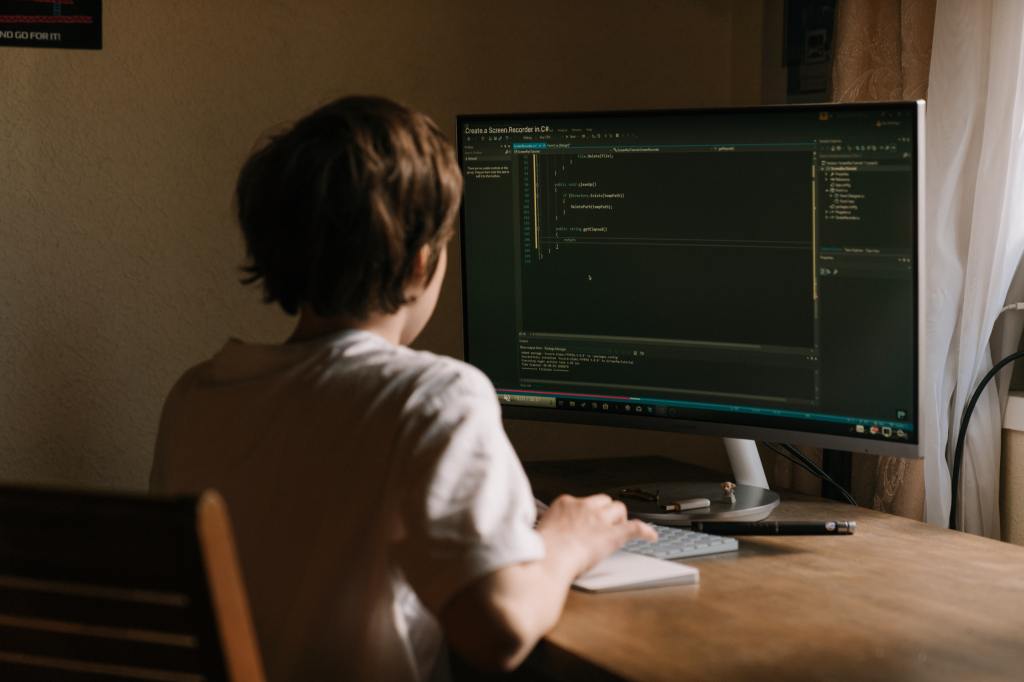
Although computer programming was once seen as a talent reserved for geeks and computer enthusiasts, it is now seen as an essential skill for learners of the 21st century. It is becoming a core component of many curricula, including in primary schools.

Coding increases imagination and teaches individuals to interact, work together through physical and geographical borders, and connect in a common language. 

Technology is part of our lives, and it is taken nearer to you by coding. Every human and machine activity is controlled by code. From following the GPS guidance while traveling or using social media, everything is governed by coding. To comprehend a hyper-connected universe, programming is everywhere and is central. Coding is like literacy and helps to exercise talents such as problem-solving, team building, and critical reasoning in the 21st century.

While many claim that coding only benefits coders and programmers, it is, in fact, a powerful talent that helps you in daily life and in every computing industry, which is just about all.

It’s also a crucial 21st-century talent to have a background in coding, which will come in handy in whatever career direction you might take. Think about it: today, scarcely any discipline or career is unaffected by computing.

Over 2 million jobs are set to be generated by 2020 with the emergence of technological developments such as AI and robotics.

These future occupations will come with new criteria, and coding will be as necessary as reskilling to remain competitive and STEM (science, technology, engineering, and mathematics) education. Coding also complements other essential, necessary skills, such as problem-solving and coordination, and strengthens them. It is an extension of analytical and imaginative thought, advances logic, and accelerates people’s ability and capacity to invent and open opportunities for new ideas to be developed. Students who are not interested in studying computer engineering but want to develop a greater understanding of technology and how it affects our society can also learn to code. 

Over the last four to five years, technology boot camps have gained attention to assist students from all backgrounds in practicing technology and pursuing software development careers. Many services run an average of about three months and can be full-time, part-time, online, or in-person.

Another explanation of why coding is essential even for younger kids is that it promotes early literacy growth.

Coding and creating literacy complement each other because they are each based on a communication system that exchanges information and offers experience.

The problem with early literacy is that it is abstract and nuanced with all of the essential elements of writing.

Take series, for instance. First-grade students struggle to start in the middle and finish in a written sense while experiencing a visual or kinesthetic phase. Students will see how sequence, transition, and “bugs” impact the result of their learning by using coding as a method to simulate the writing process.

Students as young as kindergarten can be exposed to coding, and each generation can derive a particular meaning from coding, programming, and computational thought. How complicated a program they will build is the most significant distinction between younger and older students.

Benefits of Coding As a 21st-century skill:

  • Persistence
  • Develop problem-solving skills
  • The courage to attempt new things
  • Improve Math Skills
  • Learn the importance of context
  • Improve Processing Skills
  • Build determination
  • Enhance creativity
  • Get over the gender barrier
  • Job Opportunities

One of the changes adopted in the final version of NEP 2020 is that Class 6 skills of the 21st century will only be taught to students. Coding is one of the subjects that is part of these abilities of the 21st century, and students will have the option of selecting coding from class 6 as a subject.

Advantages of Students Learning Coding From Class 6

Here are some of the advantages of learning to code from Class 6 that students can have.

  • They will be prepared for a world that, for all its activities, depends heavily on digital technologies.
  • This will make their education future-proof and provide them with better chances to pursue a career in a digital environment.
  • It can be used to simplify and improve the productivity and speed of several manual activities as AI is implemented in more areas. With this technology, students who are adept at coding can help revolutionize the transition.
  • And if a student does not want coding as their primary career, in any of their chosen industries, getting these skills will still help them.
  • Coding continues to improve children’s critical mindsets, problem-solving behaviors, and imagination. It has a positive effect on brain growth.
  • Introducing coding in Class 6-12 will help India grow better engineers who will bring fresh ideas and solutions we haven’t yet heard about.
  • Students with coding skills will find it easier to be comfortable with emerging technology in a fast-paced environment and will therefore be able to help ensure their employability.

Parents, educators, employers, and policymakers worldwide recognize that school leavers must enter the labor market with 21st-century skills to excel in a technological environment that continues to change at neck-break speed.

Different organizations and institutions highlight different skills, but there is a thorough and complete outlay of some critical 21st-century skills every student will need to succeed in the future.

Education for One and All

Education is one of the central components of society that brings prosperity and change. The more people are educated in a group, the more they can positively contribute to their society. This fact raises the value of education in society and has resulted more than ever before its spending on education. 

Another fact that brings importance to education’s relevance is that it plays a crucial role in the life of a person. Knowing the value of education is also the ultimate secret to achievement in an era of “Lifelong Learning.”

Importance of Early Childhood Education

Today’s kids are the adult people of tomorrow. With a more customized school system, creating a better world is only feasible. But so much necessitates being done to increase awareness of the value of early childhood education.

According to Pearson, fifty-seven million kids do not have any idea what it is like to be in a school. Millions more are getting an education but are not successfully studying.

Early Childhood Research & Practice (ECRP) covers subjects related to children’s growth, treatment, and education from birth to around eight years of age.

Collaborative Early Childhood and Parenting (ECAP) highlights studies focusing on science and progress related to practice and concerns related to practice, parent engagement, and regulation.

Technology’s role in education

While many educators still oppose using modern tools rather than conventional instructional techniques, it should be understood that technology can offer multiple advantages to the classroom.

  • Simplifies access to services for schooling
  • Enhances the experience of learning
  • Enables learners to practice at their own pace
  • Improves expertise in analysis
  • Supports abilities for thinking
  • Enhances self-confidence by having students learn new instruments
  • Breaks down educational walls

It is also a vital platform for educators and the opportunities that technology offers for pupils. 

The Role of the Family in Education

Studies indicate very clearly that 65 percent of the personality growth of infants is in the age group of 0-6. This study re-emphasizes the family’s role in shaping the personality of the kid!

What sort of impact on children does the family have?

The schooling and participation of the infant in the family are of considerable significance in the preschool era. In the 0-6-year-old preschool (kindergarten) period, the family’s optimistic behavior and the intentional raising of their children transform into sustained progress in the school period.

On the opposite, kids with difficulties are considered to have struggled in school life. When they enter kindergarten, kids with personality and conduct issues may have adaptation issues.

To explain the best topic and help each parent do his part, we have produced two separate names. Those subjects are:

  • Common Family Education Mistakes
  • Education for the family and attitudes required to raise a good child

You can benefit from a single sentence to update yourself, even though you have mastered a great deal of what is mentioned in this post. Education is a life-long process, as we said at the beginning. Let’s take the above two essential titles now:

Common Mistakes in Family Education

One of the parents’ most common faults is that they do not regard their kids as people. Not recognizing children as individuals will also lead parents to find their children’s actions odd and incorrect even though they are not.

The kid is not his / her character, in this case, we strive to gain our own identity. In this case, we do personalize our girls, not their characters, with our characters.

Besides, we view this as a kind of learning. Such an instructional technique would have a detrimental effect on school life, leading to issues with the child’s personality. Watch out, not to mess with misconduct, stresses the need to prevent excessive steps.

Being excessively stressed and viewing the outside world as a real danger to the child harms the child’s social growth.

In particular, resisting the child’s socialization by believing that it would harm friends’ circle may cause the child to become a nerdy person.

Parents who have not been able to fulfill their dreams want those dreams to be fulfilled by their children, which is a significant mistake. Each individual has characteristics and interests of his own. Children are people who should be discussed in their desires who healthy paths should be followed.

It is also not right to keep the child indifferent, display a lack of love, and keep everything beyond the child’s influence. Parents should review if their children fulfill their obligations.

Comparing kids with friends/peers is not right. When a distinction is made, the child’s growth should be carried out to determine whether anything is in order. The benchmarking should be based not on an individual but peers in general.

Finally, it is one of the biggest mistakes that the family members do not question themselves in failures.

Final Word

The ultimate secret for parents to lead their children to success recognizes the value of schooling. Children who will become tomorrow’s parents will only enjoy a safe and balanced life in the future if they are supported by awareness.

Education is not, however, a single term. Only if other instructional components and instruments accompany it will it be effective. Technology is a tremendous opportunity to provide both students and educators with these resources in the modern age. Parents should also be conscious of technology’s assets and show their kids how to use it positively.

De-Addiction of Gadgets.

A Useful servant but a dangerous Master – Technology

This sums up the whole scenario of technology today. And this is especially applicable in the case of gadgets. Electronic gadgets have become an integral part of our lives today, PlayStation, smartwatches, smartphones are no more a play but a day to day activity.

Screen-addiction or gadget-addiction is a real problem now.

It is predicted 70% of our day is spent with eyes glued to any sort of screen, TV, laptop, Phones or any gadget. This is serious. Following are the symptoms of gadget-addiction

  • Lack of concentration
  • Lack of memory
  • Stress, anxiety disorders
  • Physical problems like headache, backache, eye strain.

There’s a thin line between habit and addiction and this line leads to a major difference. Habit can be a routine or schedule that is difficult to give up while addiction is a stronger habit. The tendency to sacrifice on important things to keep doing something is addiction. And the dependence on gadgets is readily becoming an addiction.

Now it’s obvious, with the amount of usefulness and convenience we get with gadgets it is almost impossible to cut them off, but there are a few steps we can adopt to avoid their negative impacts,

  • This begins by reducing the time, keep some time away from all electronic gadgets, Electronic-detoxification as it is termed.
  • Practice some sort of mental concentration exercise, even if for a little time do meditation, yoga, etc.
  • Learn. Involve your time in doing productive things like learning new skills.
  • Spend some time listening or practicing music. Music doesn’t only entertain but it also calms down the anxiousness
  • Switch off your cellphones at night
  • Create tech-free zones in your home and spend some time there.

These steps won’t only keep at gadget-addiction at bay, but also increase mental peace and productivity.

The dependence on technology is huge and it’s impossible to quit it but it is possible and important to regulate the dependence.

How to Increase Concentration?

As the various dimensions increase for children to explore, the distractions also increase. Today children have multiple avenues to increase creativity and foster learning along with entertainment and fun, but more often than not, these also tend to distract children.

This requires a better concentration building among children.

One of the most effective ways to do this is, play focus games, these games don’t just imply learning but also foster concentration.

Another way that is proven by many is coding and AI, these increase their concentration and logical mindset.

Other ways that are generic for all are,

Fixing a regular routine, which includes balanced study, fun and rest.

Dividing a heavy hectic task into smaller tasks and working through them so the ability of organizing also increases

A nap of 6-8 hours on one stretch should be ensured

It is important to understand the ways of learning of the kid, if it is based on numbers, visuals or activities and help them build concentration based on that

It is proven that solving mathematical or logical problems helps to build concentration and understand things efficiently.

These are some ways apart from meditation, yoga etc. that can effectively build the concentration power of children without sacrificing any of their act.

Impact of Covid-19 on Education.

As the CBSE Board results get declared this week, it became evidently clear that a lot of disruptions happened in the Education sector due to COVID Pandemic situation. As per an UNESCO report, the pandemic will unfavorably affect more than 290 million understudies across 22 nations because of the conclusion of schools in the wake of the lockdown. And that is what happened.

We were clearly not prepared for one such situation, however an urgent supplement had to take over. Which was online education. Not that virtual education wouldn’t have come otherwise, but it would have taken some time to get acquainted with. So, we can actually say, COVID Pandemic accelerated the inevitable.

In the course of recent years, e-learning has seen an upgrade because of the omnipresent Internet network, the expansion of cell phones and huge advances in innovation.

Thus, calling for further innovations and functions in the Ed-tech industry.

This acceleration of Virtual Education has brought about several advantages for the education sector, which include cost reduction, flexibility, More networking opportunities, better time management and numerous others.

Now, certainly the infrastructure and lack of expertise with digital equipment is still a challenge for many, but this is only supposed to grow with time. Brick and mortar kind of schools cannot all of a sudden switch with virtual classrooms but it is surely in the process and getting only better with internet connectivity.

Why is design thinking important?

Firstly, Bursting the myths, Design thinking is not only for designer. Yes! It is used by designer very prominently but every artist, professional, writer or anybody has used design thinking in their process.

Design thinking is basically a process of understanding the problem or need of user, observing their behavior, handling challenges, create strategies and make solutions for the same. It is a solution-building approach that involves observation, innovation and details.

If we had to lay down the basic processes involved then, first Understanding the problem or need, secondly defining the problem, third ideating the approaches of solutions, fourth prototype of the solution and finally test the solution.

So, this clearly defines that design thinking is not only for designers but is involved in every profession and even to have a solution to real life problems.

This is especially very important for children to learn at a young age to create a solution centric approach, create mindset, observation abilities and attention to details. These skills will help them build a better personality.

It is said, learning to learn is one of the most essential arts. And design thinking caters to it efficiently. When children learn Design thinking they also understand the art of learning. It helps them gain a better understanding and optimally use their learnings.

Hence, it is one of the most required skills, and helps most in building a competent personality of children.

Aerodynamics For Children.

Passion has no age and often the interest developed during young age are the most lasting ones.

Many of us have complaints about not being able to learn about our passion during our younger age. We have all had inclinations for stars or astronomy or colors or animals. But when some of us learn about it and gain an understanding it is then that they stand out.

A lot of children have a major inclination for Aircrafts or aerospace, and this would usually fade or remain untouched until taught about it.

Hence Aerodynamics is an important study for everyone.

Aerodynamics implies, aero – air & dynamics – movement. So, aerodynamics is the way air moves around things. Aerodynamics explains how some objects like aircrafts can fly, how kites fly or basically what requires some objects to fly.

In the course of Aerodynamics for children, they learn about the forces of aerodynamics, about objects and other factors that are very crucial. This is extremely important for anyone who even has a slightest interest in aviation. But contrary to this common belief, Aerodynamics is not only restricted to aerospace or aircrafts but it forms a major part in understanding automobiles, vehicle designing and a lot of other factors.

Hence, every kid has a right to pursue their interest or at least to know more about it so that they at least know if they have a passion or is it just liking. A course on aerodynamics helps them to understand all the crucial concepts pertaining to this and thus they can take one step ahead for a brighter future.