
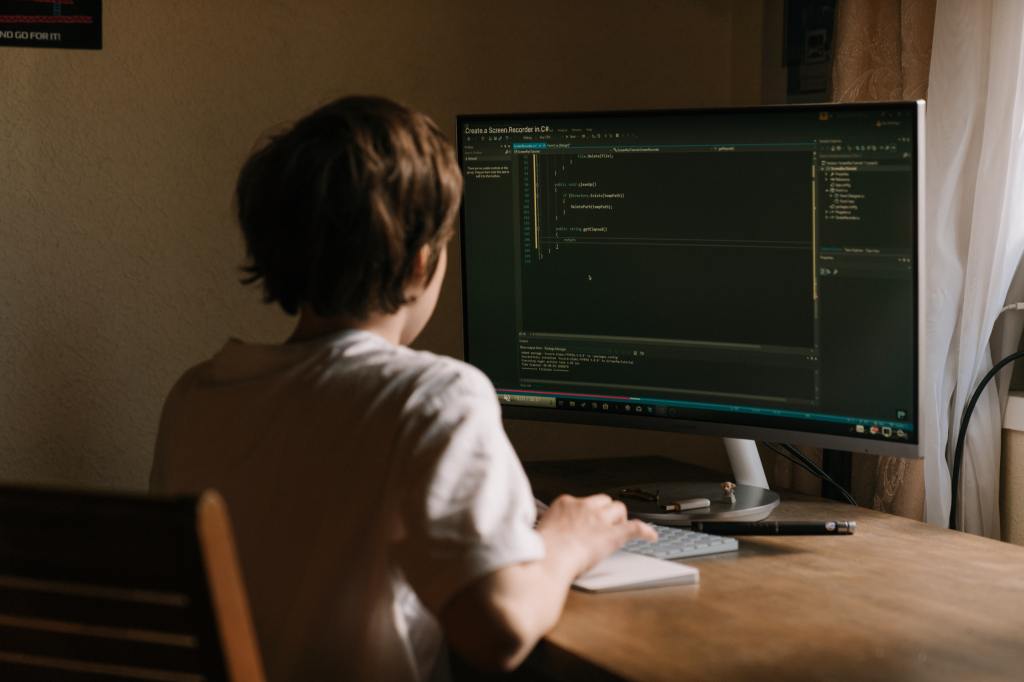
Although computer programming was once seen as a talent reserved for geeks and computer enthusiasts, it is now seen as an essential skill for learners of the 21st century. It is becoming a core component of many curricula, including in primary schools.
Coding increases imagination and teaches individuals to interact, work together through physical and geographical borders, and connect in a common language.
Technology is part of our lives, and it is taken nearer to you by coding. Every human and machine activity is controlled by code. From following the GPS guidance while traveling or using social media, everything is governed by coding. To comprehend a hyper-connected universe, programming is everywhere and is central. Coding is like literacy and helps to exercise talents such as problem-solving, team building, and critical reasoning in the 21st century.
While many claim that coding only benefits coders and programmers, it is, in fact, a powerful talent that helps you in daily life and in every computing industry, which is just about all.
It’s also a crucial 21st-century talent to have a background in coding, which will come in handy in whatever career direction you might take. Think about it: today, scarcely any discipline or career is unaffected by computing.
Over 2 million jobs are set to be generated by 2020 with the emergence of technological developments such as AI and robotics.
These future occupations will come with new criteria, and coding will be as necessary as reskilling to remain competitive and STEM (science, technology, engineering, and mathematics) education. Coding also complements other essential, necessary skills, such as problem-solving and coordination, and strengthens them. It is an extension of analytical and imaginative thought, advances logic, and accelerates people’s ability and capacity to invent and open opportunities for new ideas to be developed. Students who are not interested in studying computer engineering but want to develop a greater understanding of technology and how it affects our society can also learn to code.
Over the last four to five years, technology boot camps have gained attention to assist students from all backgrounds in practicing technology and pursuing software development careers. Many services run an average of about three months and can be full-time, part-time, online, or in-person.
Another explanation of why coding is essential even for younger kids is that it promotes early literacy growth.
Coding and creating literacy complement each other because they are each based on a communication system that exchanges information and offers experience.
The problem with early literacy is that it is abstract and nuanced with all of the essential elements of writing.
Take series, for instance. First-grade students struggle to start in the middle and finish in a written sense while experiencing a visual or kinesthetic phase. Students will see how sequence, transition, and “bugs” impact the result of their learning by using coding as a method to simulate the writing process.
Students as young as kindergarten can be exposed to coding, and each generation can derive a particular meaning from coding, programming, and computational thought. How complicated a program they will build is the most significant distinction between younger and older students.
Benefits of Coding As a 21st-century skill:
- Persistence
- Develop problem-solving skills
- The courage to attempt new things
- Improve Math Skills
- Learn the importance of context
- Improve Processing Skills
- Build determination
- Enhance creativity
- Get over the gender barrier
- Job Opportunities
One of the changes adopted in the final version of NEP 2020 is that Class 6 skills of the 21st century will only be taught to students. Coding is one of the subjects that is part of these abilities of the 21st century, and students will have the option of selecting coding from class 6 as a subject.
Advantages of Students Learning Coding From Class 6
Here are some of the advantages of learning to code from Class 6 that students can have.
- They will be prepared for a world that, for all its activities, depends heavily on digital technologies.
- This will make their education future-proof and provide them with better chances to pursue a career in a digital environment.
- It can be used to simplify and improve the productivity and speed of several manual activities as AI is implemented in more areas. With this technology, students who are adept at coding can help revolutionize the transition.
- And if a student does not want coding as their primary career, in any of their chosen industries, getting these skills will still help them.
- Coding continues to improve children’s critical mindsets, problem-solving behaviors, and imagination. It has a positive effect on brain growth.
- Introducing coding in Class 6-12 will help India grow better engineers who will bring fresh ideas and solutions we haven’t yet heard about.
- Students with coding skills will find it easier to be comfortable with emerging technology in a fast-paced environment and will therefore be able to help ensure their employability.
Parents, educators, employers, and policymakers worldwide recognize that school leavers must enter the labor market with 21st-century skills to excel in a technological environment that continues to change at neck-break speed.
Different organizations and institutions highlight different skills, but there is a thorough and complete outlay of some critical 21st-century skills every student will need to succeed in the future.
 CodeEdutech